
Six months ago, a lot of companies were still treating AI as something to restrict, contain, or keep away from anything that looked remotely sensitive. Not because every executive suddenly became anti-technology, and not because supply chain people are allergic to new tools. The skepticism was pretty well earned. There were real concerns around data privacy, security, hallucinations, customer information, legal exposure, weak controls, and vendors who could make a demo look like science fiction while still dodging the basic question of what happens when the data is wrong.
So when corporate teams said “hard no,” I understood it. In plenty of cases, that was not ignorance as it was more risk management.
What has changed is that the risk did not go away, but the cost of not understanding AI went up very quickly. I am hearing a different tone now from the same kinds of organizations that were blocking access or hoping the conversation would quiet down. Boards and leadership teams are asking people to learn it, evaluate it, build policy around it, and explain where it belongs. In some cases, it is not being framed as curiosity anymore. It is being handed down as an assignment.
The first AI shift is not full adoption, and it is definitely not maturity. It is not a world where every container, chassis, gate event, invoice, appointment, exception, and claim suddenly becomes smarter because somebody put AI in a roadmap. The first shift is more basic than that, but it may matter more in the long run:
AI has moved from something companies could dismiss to something leaders are now expected to understand.
The hard “no” was not irrational
Supply chain has lived with bad data long enough to know what happens when systems sound confident and are still wrong. A truck shows up at 11 p.m. for a 2 p.m. appointment. One system says the container is available, another system disagrees, and the person on the phone is expected to reconcile reality while a customer is asking for an update. A chassis record is duplicated, a damage photo is missing, a gate event gets captured late, and by the time the report makes it into the meeting, half the discussion is about whether the report can be trusted in the first place.
Now add AI to that environment and tell people to relax – and, of course, there was resistance.
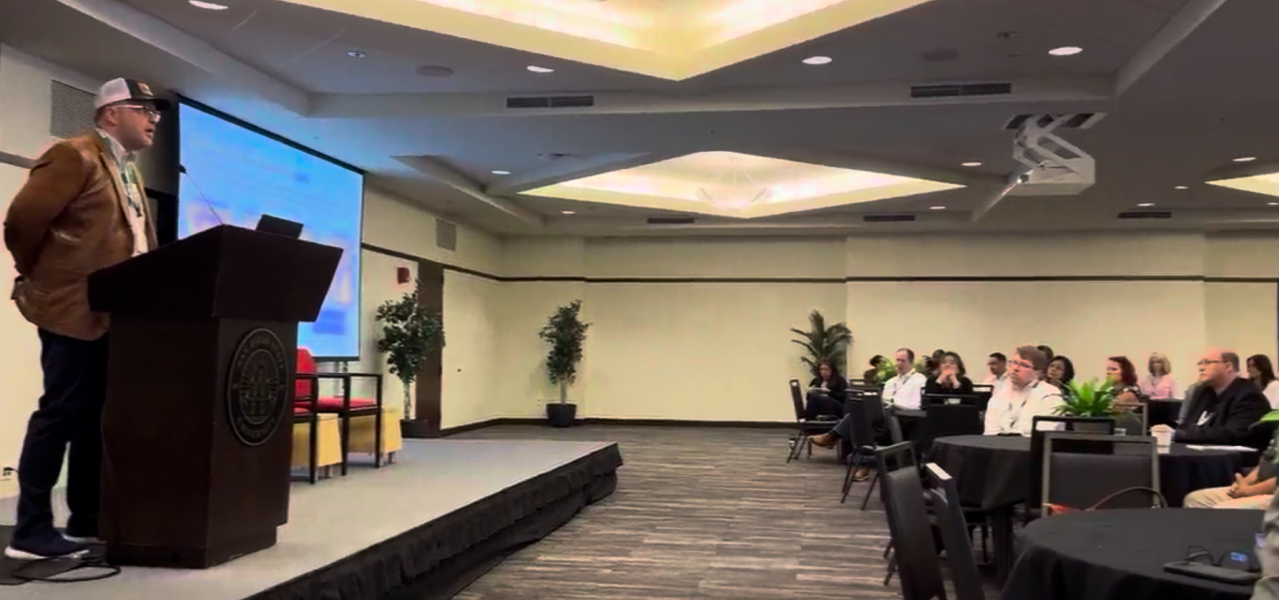
The ASCM session in San Diego I presented last week spent a lot of time on this point because it is where the practical conversation has to start. LLMs (Large Lanugage Models) can summarize, draft, search, synthesize, support training, and help people make sense of information. Agents can monitor workflows and trigger activity. Applied AI can connect physical events to digital records. Analytics can surface exceptions and help stage decisions. But every one of those capabilities rests on the same foundation: data. If the data is weak, AI does not magically become strong. It gives weak data more speed, more polish, and sometimes a more convincing voice than it deserves.
That is why I do not think the early resistance was foolish. The problem is that risk management and avoidance are not the same thing, and the market has started to move past the point where avoidance looks responsible.
What changed is the cost of not understanding it
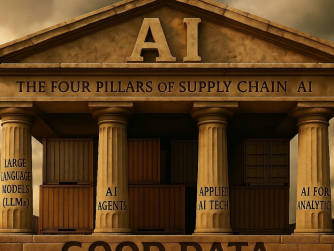
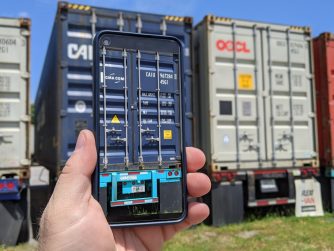
The Intermodal Association of North America (IANA) and ASCM San Diego Chapter conversations last week confirmed what I have been hearing in other rooms. People are not just asking whether AI exists or whether ChatGPT can clean up an email. They are asking what AI means for operations, analytics, execution, visibility, training, exception management, and industry standards. The IANA session moved from the Four Pillars of AI into an Intelligent Container Journey and then into member discussion about what the industry needs next, which is a very different conversation than a basic “what is AI?” session.
The IANA survey feedback matters because it gave us a signal that the interest is broadening. The data showed interest moving beyond basic LLM usage and into areas like analytics, agents, applied AI, and more practical operating questions. I would not overstate that as readiness because survey interest is not implementation maturity, but it does tell us the room has moved. People are no longer just asking whether AI can help write something cleaner. They are starting to ask whether it can help them understand what is happening inside the business.
That is a meaningful change, especially in supply chain, where “understanding what is happening” is often half the battle.
Prompting was the first door, not the building
A lot of people first met AI through simple prompting, and that was probably necessary. Cleaning up an email, summarizing a long document, drafting a policy paragraph, or turning messy notes into something readable helped people get familiar with the technology without putting production systems, customer commitments, or operational decisions at risk.
But we should be honest about what that is: It is familiarization, not strategy.
A cleaner email does not fix bad appointment data. A better meeting summary does not explain why a night crew keeps getting called in on Fridays. A chatbot response does not tell you whether the same carrier is repeatedly creating after-hours cost exposure because of a scheduling issue, a customer pattern, or a process nobody has had time to examine closely enough.
This is where the C.A.R.E. prompt method becomes useful, not as a clever trick for getting prettier AI output, but as a discipline for framing a real business problem.
Context
Action
Result
Example
C.A.R.E. prompt structure for LLMs forces the operator to define what the AI needs to know, what it is being asked to do, what the useful output should look like, and what “good” means in the context of the actual operation.
In the ASCM presentation, I used a fictional operations leader dealing with a problem that was intentionally ordinary. His night crew had been called in three Fridays in a row, trucks were arriving at 11 p.m. for 2 p.m. appointments, the gate logs probably held the answer somewhere, and nobody had time to manually dig through hundreds of rows while the problem kept repeating. That is not an AI problem since it is more of an operations problem with a data trail attached to it.
AI becomes useful only when it is pointed at that kind of headache in a way the business can act on. The better ask is not “analyze my data,” which is the kind of vague request that usually produces vague answers. The better ask is to identify all moves outside standard operating hours, group them by carrier and time of occurrence, estimate the cost exposure, and show the patterns most worth addressing. That is still prompting, technically, but it is really problem framing, and that distinction matters.
The Four Pillars of AI gave the conversation a better shape
One reason the IANA session landed, in my view, is that the Four Pillars of AI help people stop treating AI as one giant bucket. That matters because “AI” is becoming one of those words that can mean everything and nothing at the same time. If someone says they are “doing AI,” I still do not know whether they mean writing better emails, automating a workflow, detecting physical events, forecasting exceptions, or launching a very expensive pilot that will require three more integrations before it does anything useful.
The Four Pillars give leaders a cleaner way to think:
- LLMs help people work with language, context, documents, knowledge, and communication.
- Agents introduce execution, coordination, monitoring, and escalation.
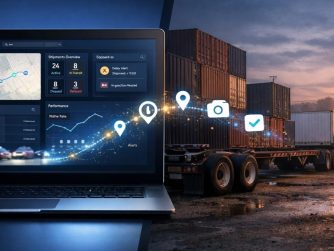
- Applied AI connects the physical world to digital systems by detecting events, assets, conditions, and activity.
- AI analytics helps make sense of patterns, risks, exceptions, and possible decisions.
Those are not the same capability with different labels. They carry different risk, require different data foundations, and create value in different parts of the business. That is why the first AI shift cannot stop at teaching people how to prompt. Prompting is part of the literacy curve, but it is not the whole curve. Supply chain leaders do not need to become machine learning engineers, but they do need enough language to ask better questions about which problem they are solving, which pillar they are actually dealing with, what data is required, what decision or action could be influenced, and where a human still needs to stay involved.
The broader market is moving from answers to action
The broader technology market is moving in the same direction. NVIDIA’s official language around OpenClaw (open source AI Agent) is not subtle. Jensen Huang described it as “the operating system for personal AI,” and NVIDIA framed the rise of OpenClaw and Claude Code as an “agent inflection point” that moves AI beyond generation and reasoning into action. Linux Journal went further in its coverage, quoting Huang’s remark that OpenClaw may be “the single most important release of software” and explaining the real shift clearly: AI is moving from generating answers to executing work across connected systems. (Reference: https://www.linuxjournal.com/content/openclaw-2026-what-it-whos-using-it-and-whether-your-business-should-adopt-it and https://nvidianews.nvidia.com/news/nvidia-announces-nemoclaw)
I would not build a supply chain strategy around a conference quote nor a very insecure and powerful agentic AI platform like OpenClaw, but I would pay attention to the signal behind it. The broader technology market is moving from AI that answers questions toward AI that can act, coordinate, retrieve information, use tools, and continue working toward a defined goal. That does not mean supply chain companies should chase every agentic AI announcement that hits the feed, but it does mean the old mental model of AI as a chatbot in the corner is already out of date.
That shift is exactly where supply chain leaders need to be careful. AI that drafts a paragraph is one kind of risk. AI that recommends an exception path, escalates a customer issue, prioritizes a workflow, interprets gate activity, or triggers a follow-up action is another matter entirely.
Human-in-the-loop (HITL) is where the serious conversation starts
Human-in-the-loop should not be treated like a checkbox. A person glancing at an output after the fact is not oversight. That is cleanup with better branding.
Real human-in-the-loop design means the workflow is clear about what AI can recommend, what it can execute, what requires approval, what gets logged, what confidence level is acceptable, and who owns the outcome when something is wrong. It also means knowing when the human is not there to babysit the AI, but to apply context the AI does not have.
Supply chain is full of that kind of context. A late truck is not always the same kind of late. A missing event is not always a missed move. A bad timestamp could be a system issue, a process issue, or a sign that the physical event never happened the way the record says it did. A carrier pattern could point to poor compliance, but it could also reveal that the appointment process is creating the behavior everyone is complaining about.
AI can help surface those patterns faster, stage the work, and make the invisible more visible. The business still needs judgment, accountability, and a way to verify what the system thinks it found. That is not anti-automation. It is how automation survives contact with operations.
Data is where the first shift meets the yard
The first AI shift is organizational. The next one is operational, and it will not be won by the companies with the loudest AI language. It will be won by the companies that know where their data comes from, what shape it is in, who trusts it, and where it breaks down. That is the unglamorous part, which usually means it is the part that matters.
Gate logs, asset IDs, appointment times, carrier records, transaction data, damage evidence, yard activity, customer exceptions, work orders, manual overrides, and the emails that never made it into the system but somehow contain the one detail everyone needed are all part of the world AI has to operate in. If the foundation is poor, AI can make the problem worse because it gives bad information scale. It can also make bad information feel more authoritative than it deserves, which is a dangerous combination in an industry where a wrong assumption can turn into real cost very quickly.
The ASCM presentation deck that I shared put it plainly: errors in the data foundation compound and get amplified during decisions and actions.
“Garbage in, garbage out”
This phrase may be old language, but it has not expired. AI just raises the stakes and amplifies bad data.
The second shift will be harder
The first AI shift has already happened. AI moved from annoyance to assignment, from “do not use it” to “we need to understand it,” and from individual experimentation to leadership expectations. The conversation has also moved beyond email cleanup and into agents, analytics, applied AI, and the harder question of where AI can create real operational value.
That is progress, but it is not the finish line.
The second shift is where companies have to turn interest into judgment. They will have to decide:
- which use cases are worth pursuing,
- which data can be trusted,
- which workflows need a human in the loop, and
- which vendor claims deserve a polite smile followed by much better questions.
For supply chain, this cannot become theater. We already have enough dashboards nobody fully trusts, integrations that almost work, and exception processes held together by people who know which spreadsheet is “the real one.”
The opportunity with AI is not that it replaces all of that complexity with magic. The opportunity is that, used well, it can help us see the operation more clearly, ask better questions, catch patterns earlier, and put people’s attention where it matters most.
The first shift was literacy, permission, and pressure. The second one will be trust, data, workflow, and judgment. That is where the real work starts.


Latest posts by Chris Machut (see all)
- AI Is an Amplifier, Not a Shrink Ray - July 14, 2026
- From Buzz to Blueprint: Two Years on the Road with the Four Pillars of AI - June 17, 2026
- The First AI Shift Has Already Happened - May 12, 2026