
A field report from a dozen stages, four webinars, and a couple hundred honest poll responses on how the supply chain actually adopts AI.
Before I ever said the acronym AI or the words “artificial intelligence” on a stage, I spent more than a decade helping put cameras on heavy machinery.
The first one was called TugCam – terrible name with a real problem. The people operating the machines could not see what mattered most: the load behind the wall, the worker in the blind spot, the thing they were about to hit. A team of genuinely talented people, of whom I was the loudest rather than the smartest, grew that terrible name into HoistCam, a rugged wireless camera that lets crane and vessel operators see the unseen. I will happily take credit for the stubbornness. The brilliance belongs to the people I was lucky enough to build with, and they know who they are.
In 2016 we were awarded a grant to bolt AI onto HoistCam, to teach the cameras to understand what they were seeing instead of merely showing it. This was years before the world had heard of ChatGPT, which means we got to make our early mistakes in private. Somewhere in that work, the lesson I have never been able to shake came into focus. The most expensive problems in industry are rarely caused by what people can see. They are caused by what people cannot. The operators were never the only blind ones. The people managing the machines, the yards, and the freight could not see either. Their blind spot was simply made of paperwork.
Freight moves in real time while the official record gets stitched together later from emails, spreadsheets, phone calls, and whatever everyone agrees probably happened. I have joked on stage that once something leaves the port, it becomes more of a philosophical concept than something real. Audiences laugh and then they nod. Then, somebody in the third row stops laughing entirely, because they are picturing a specific container.
That second blindness became SiteTrax.io. It grew up inside our camera business for years before becoming its own company in 2024. I am a computer engineer by training and an entrepreneur by habit, which means when something bothers me long enough, we build something about it. The “we” is the most important word in that sentence.
The Question That Followed Me Around
For the past two years, the thing bothering me has been a question.
I have fielded it on stages from Long Beach to Las Vegas to Amsterdam. Different conferences, different corners of the supply chain, different badge lanyards. And in every hallway afterward, the same words found me:
“Okay, I’m convinced. Where do I start?”
If you have asked it, you are in good company. It is the best compliment a technologist can get, because it means you have moved past skepticism and into planning. But it kept coming because nobody had a shared way to answer it. The supply chain did not have an AI problem, but It had a vocabulary problem.
Every pitch, keynote, and trade article used the same two letters to describe wildly different things. A chatbot that drafts customer emails. A camera that reads container IDs in the rain. A model that predicts chassis shortages three days out. Software that books dock appointments at two in the morning. All of it was “AI,” and when one word means everything, it helps with nothing. You have sat through that vendor meeting. So have I. I have also been the vendor.
So at SiteTrax.io we did what engineers do when the noise gets overwhelming. We drew a diagram.
We sorted the whole noisy category, every tool calling itself AI, machine learning, or a frontier model, into four buckets an operator, a CIO, and a CFO could all point at in the same meeting: Large Language Models, AI Agents, Applied AI, and AI for Analytics. We called it the Four Pillars of AI. It started as a whiteboard sketch for customers and partners.
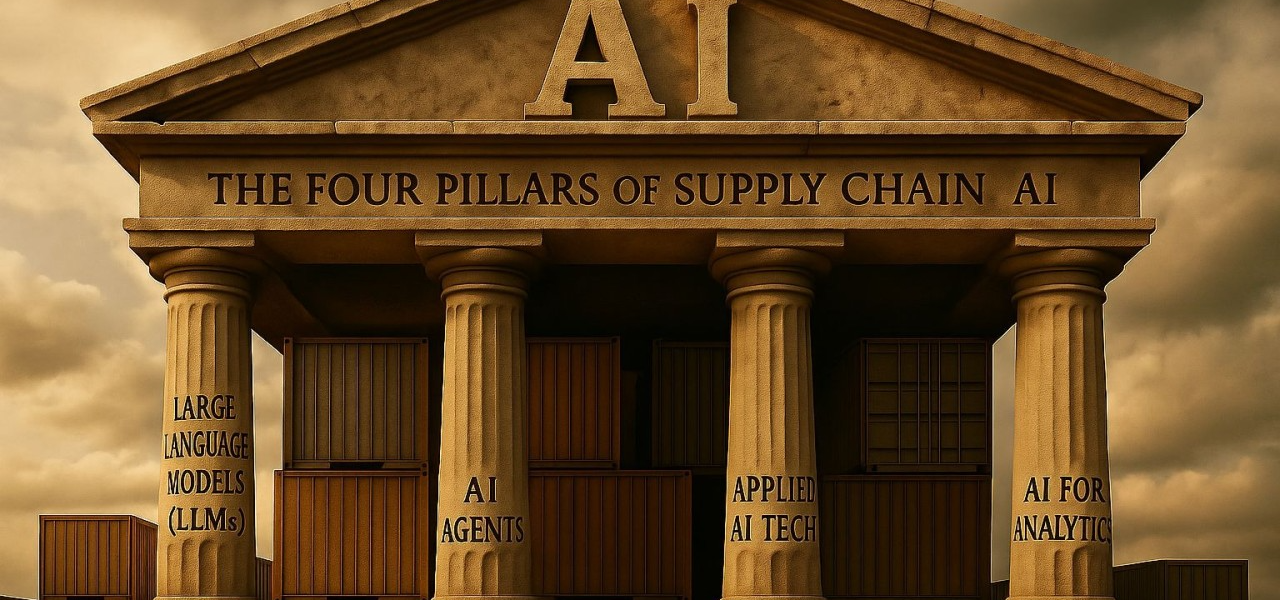
Back in 2025 I turned that diagram into a picture, generated with ChatGPT, because if you are going to preach AI adoption you had better practice it. A Greek temple with four stone columns, one per pillar. AI on the pediment and shipping containers stacked in the shadows behind them. And carved into the base the entire structure stands on: two words. GOOD DATA.
That is the whole framework in one image. Four pillars, one roof, and a foundation that decides whether any of it stays standing.
Then the Intermodal Association of North America (IANA) decided to do something rare for a trade association: get ahead of a technology wave instead of reacting to one. Education first, hype never, and preferred practices in place before regulations show up to write them for us. IANA invited us to bring the Four Pillars to its members, and intermodal became the framework’s proving ground. If a concept can survive contact with rail ramps, drayage dispatchers, and port IT departments, it can survive anywhere.
The Road Test
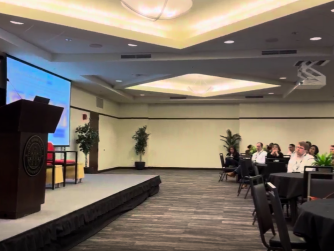
The framework grew up in public, one stage at a time. A breakout session at IANA’s May 2025 Business Meeting in Kansas City told us we had barely scratched the surface. That September the Four Pillars debuted on the EXPO stage in Long Beach, at an event drawing more than 1,800 supply chain professionals. From November through March, Mark McKendry and I co-hosted IANA’s four-part webinar series, “Beyond the Buzz,” with a deep dive on each pillar. And this May 2026 in New Orleans, we unveiled “An Intelligent Container Journey,” IANA’s interactive resource that follows one container through the network while all four pillars do their jobs.
The framework has now survived three conference stages, four webinars, hundreds of audience questions, and one very thorough hotel safety briefing in New Orleans. (If you have never opened an AI session by reviewing the locations of the nearest fire extinguishers, I recommend it. It keeps you humble.)
Along the way, each pillar earned a job title. If you remember nothing else from this article, remember these four lines:
- The Interpreter (Large Language Models / LLM) turns messy human language into trusted records (also referred to more commonly as Generative AI).
- The Conductor (AI Agents) closes loops while the loops are still open.
- The Optimizer (Applied AI) turns the physical world into data.
- The Sentinel (AI for Analytics) sees trouble before it arrives.
All four stand on the same foundation: good data. Accurate, timely, structured, and shared. The pillars get the applause, while the foundation of data does the work.
Here is each one in plain language, and what two years of audiences taught me.
Pillar 1: Large Language Models (Generative AI), the Interpreter
If you have used ChatGPT, Gemini, or Claude, you have met this pillar. LLMs read and generate human language, which sounds simple until you remember how much of the supply chain runs on language nobody structured.
Bookings arrive as emails. Instructions live in PDFs, while exceptions get explained over the phone and summarized, badly, in a spreadsheet. The Interpreter reads that mess and turns it into a clean, trusted record before the freight ever moves. That is the highest-leverage spot in the journey: every downstream decision inherits the quality of that first record.
The lesson from the webinars was simple. Most professionals do not need convincing that LLMs are useful; however, they need permission to start, plus guardrails. Treat outputs as drafts, keep sensitive data out of public tools, and verify anything that sounds suspiciously confident.
We even shared prompt-writing tips. Mine included a personal crusade against “em dashes”. The audience laughed but I was completely serious. You should not find a single one in this article.
Pillar 2: AI Agents, the Conductor
I was a junior at Virginia Tech when movie The Matrix came out, so I understand if the word “agent” makes you picture sunglasses and trench coats. The reality is less cinematic and far more valuable.
An AI agent is software with follow-through. It watches for a condition you define, applies your rules, takes an approved action, and logs every step. Dashboards explain what happened. Reports arrive after action is no longer possible. Agents close the loop while the loop is still open.
Here is one in action: A trailer blows past its dwell threshold by two hours. The agent flags the exception, notifies operations, creates a follow-up task, and records exactly what it did. A human reviews the context, decides the resolution, and remains accountable. The agent did the waiting, the chasing, and the follow-up but the person supplied the judgment.
Our rule of thumb from the February session: if a human must approve it today, an agent should not do it tomorrow without a deliberate governance change. Keep agents away from pricing, irreversible actions, and labor decisions until your guardrails are ready. Trust is earned in advisory mode first and the concept of HITL (Human-in-the-Loop) is critical.
Agents do not replace people. They replace the waiting, chasing, and follow-ups that slow operations down.
Pillar 3: Applied AI, the Optimizer
This is the pillar where I live, so allow me a moment of honest bias.
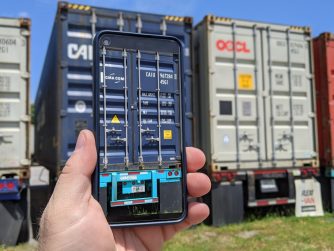
Applied AI, sometimes called Physical AI, is intelligence operating on the physical world: computer vision, OCR, sensors, and robotics working at gates, yards, docks, ramps, and cranes. A decade ago, traditional general OCR hovered around 70 percent accuracy. That sounds tolerable until you realize it means roughly three of every ten assets in your system could be recorded wrong. Modern AI-trained vision systems read damaged, dirty, oddly angled container and chassis IDs at 98 percent and better in real-world conditions. That jump is the difference between a report nobody trusts and a record everybody builds on.
But here is the point I make on every stage, and the reason I rank this pillar where I do: Applied AI stands closest to the foundation. Good data does not appear by magic. It gets poured, and in the supply chain there are two main pours: the Interpreter cleaning the words at origin, and the Optimizer capturing the physical world as it actually moves. The Conductor and the Sentinel are only as good as the picture those two hand them, and most of the supply chain’s reality never makes it into a system at all.
It also plays beautifully with the IoT investments you have already made. A GPS unit is wonderful at telling you where your tagged tractor is. It says nothing about the untagged container that just rolled through your gate on somebody else’s chassis. Cameras see everything that moves, tagged or untagged, and vision AI turns that footage into structured events your systems can use.
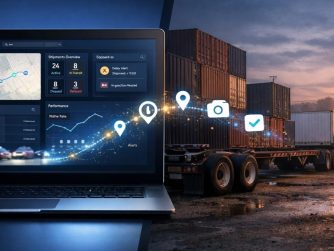
Closing that gap is exactly why we built SiteTrax.io. We turn ordinary camera feeds into real-time, structured asset data, the IDs, locations, and movement events, delivered by API into whatever platforms and AI you already run. We call it the supply chain’s AI-ready physical data layer. In temple terms, we never set out to be one of the pillars. We pour the slab they stand on. That is the subtle plug. Back to the framework.
Pillar 4: AI for Analytics, the Sentinel
Most operational dashboards are rearview mirrors. Beautifully formatted history. AI for Analytics points the lens forward, learning from historical and live data to predict dwell risk, ETAs, equipment shortages, and SLA breaches before they surface downstream.
In the January IANA webinar, the conversation kept circling back to the oldest rule in data: garbage in, garbage out. A forecast built on incomplete gate data is a confident guess wearing a suit. But when the inputs are reliable, the Sentinel changes the posture of an entire operation, from reacting to anticipating.
Notice the relay forming here. The Optimizer supplies the ground truth. The Sentinel spots the issue. The Conductor acts on it. The Interpreter translates between the humans and everything else. Which brings me to the part that matters most.
The Pillars Only Work as a Team
The biggest AI risk I see in the supply chain rarely makes it onto a slide: isolated wins. A vision system here, a chatbot there, a forecasting pilot in a third department. Each one celebrated but none of them connected. Intelligence that cannot share what it knows is just expensive trivia.
That is why the newest chapter follows a piece of freight instead of a technology. “An Intelligent Container Journey,” (link below) built with IANA and released at the 2026 Business Meeting, traces a single box through six stages: origin, gate and terminal, rail linehaul, end ramp, final mile, and empty return. At every handoff, a different pillar takes the lead. The Interpreter cleans the booking before movement begins. The Optimizer watches the gate and the stack. The Sentinel predicts the ETA and the chassis crunch at the end ramp. The Conductor reroutes around the disruption and closes the order cleanly.
We chose a container because it is the supply chain’s most photogenic unit of work, but the relay is the same everywhere. Swap in a trailer, a railcar, or a pallet and the handoffs do not change.
More than five IANA team members and seven industry expert volunteers built the Journey, using AI tools along the way. We practiced what we preached, and the drafts still collected plenty of human red ink. Exactly as it should be.
What Two Years of Audiences Taught Me
Specific beats spectacular. The sessions that landed were never the ones with the boldest predictions. They were the ones that described somebody’s Tuesday: the 6 a.m. yard check, the spreadsheet reconciliation, the phone call to confirm what the system should already know. You have made that call. When the example matched the workday, “Is this real?” became “How do I start?”
Trust is the real adoption curve. Across 225 poll and survey respondents in the webinar series, the concerns were consistent and entirely fair: job impacts, data privacy, reliability, and what happens when the machine is wrong. The honest answer is governance. Start agents in advisory mode and expose the reasoning. Log every action and keep a human in the loop for anything with a blast radius. Adoption moves at the speed of trust, and trust moves at the speed of transparency.
Why This Is the Moment
Here is what changed over those two years. AI has crossed from conversation into commitment. Budgets are forming, pilots are launching, and leaders are mandating operational adoption. The momentum is justified and it also raises a harder question that I now open every talk with:
Do you know what foundation your AI will be operating on?
AI does not operate on reality. It operates on your business’s digital version of reality, and in logistics, that distinction means everything, because freight moves first and the truth catches up later.
Here is the objection a sharp CIO will raise: these models were trained on the messiest dataset humanity ever produced, the open internet, and they came out remarkably capable. So why does your data need to be clean when theirs never was?
Because training and inference are different sports. At training time, errors average out. One wrong document among trillions of tokens gets outvoted by a million right ones, and all that mess taught the models to read messy language, which is a genuine strength. At inference time, when AI operates on your business, nothing averages out. Your gate record for that container is the only witness, and the model has no way to check your yard against the rest of the internet. Trained on mess, a model learns to read it. Fed mess about your operation, it believes it.
Training forgives; however, inference does not.
Bad data used to slow decisions down. Someone made a phone call, checked the yard, fixed the record. Humans absorb the ambiguity and AI changes the consequences of that old problem, because it makes decisions faster, broader, and more confident. A false signal that once caused a phone call now moves through planning, promises, forecasts, and physical operations with the full force of the AI stack behind it.
AI compounds the version of reality you give it. Hand it a reliable foundation and the returns compound in your favor. Hand it a fiction and you have automated your blind spots.
That is why the biggest letters in that temple image are nowhere near the roof. They are carved into the foundation.
I have been fighting blind spots since a camera called TugCam, first from the operator’s seat and now across the entire supply chain. I am not interested in watching us automate them.
So, Where Do You Start?
Two years ago, in that Long Beach hallway, I owed people a better answer than “it depends.” Here it is with one starting move per pillar, each small enough to begin this quarter:
- Interpreter. Pick one messy document flow, bookings or BOLs (Bill of Lading), and let an LLM draft the structured version. A human verifies every field for the first month. You are training your trust, both directions.
- Conductor. Hand one repetitive exception, dwell alerts or missed follow-ups, to an agent in advisory mode. It recommends, you decide, everything gets logged.
- Optimizer. Find the spot where your digital record and your physical operation disagree the most, and put eyes on it. If the capture is wrong, every other pillar inherits the error.
- Sentinel. Choose one number you wish you could predict, and start baselining it today. Forecasts need history, and history starts the day you begin recording it honestly.
Before any of it, rate yourself honestly in three areas: data quality, process standardization, and executive guardrails. Wherever you scored lowest, start there and the pillar can wait. However, the foundation of data cannot.
The hallway question used to be “Where do I start?” Today I hear a better one: “What should we do next?” That shift, from curiosity to commitment, is the whole story. The costs will be enormous for organizations that skip the foundation, and the opportunity will be even greater for those that build it first.
There is a quieter opportunity hiding inside that work. The AI and human-in-the-loop processes a company builds for itself go far beyond operational plumbing. They become real intellectual property, an asset the business owns and they give the humans something back when implemented properly: less stress, fewer fire drills, and the room to do work that actually requires a person.
A special thank you is owed to Aaron Tarnowski for imagining and implementing this journey with me into AI as we grow SiteTrax.io. Check him out on LinkedIn as he is focusing on the “human” when it comes to AI.
I started signing off my podcast a certain way during the pandemic in 2020, and it stuck. So I will close the way I always do: “stay safe out there”.
Explore the Work
- HoistCam: hoistcam.com
- An Intelligent Container Journey (interactive resource): intermodal.org/an-intelligent-container-journey
- The Four Pillars of AI Overview (PDF): Four Pillars of AI Overview
- IANA Education On-Demand (webinar recordings and slides): intermodal.org/education-on-demand
- Webinar series feedback dashboard: iana.sitetrax.io
- How we build the physical data layer: sitetrax.io
- More articles: thoughtleadership.biz
- About the author: machut.com
Chris Machut is the founder and CEO of SiteTrax.io, the supply chain’s AI-ready physical data layer. His Four Pillars of AI framework gives the industry a shared language for AI: four pillars, one foundation, no buzzwords. He writes and podcasts at ThoughtLeadership.biz from Virginia, USA. More at machut.com.
Originally published on LinkedIn, June 17, 2026.


Latest posts by Chris Machut (see all)
- AI Is an Amplifier, Not a Shrink Ray - July 14, 2026
- From Buzz to Blueprint: Two Years on the Road with the Four Pillars of AI - June 17, 2026
- The First AI Shift Has Already Happened - May 12, 2026