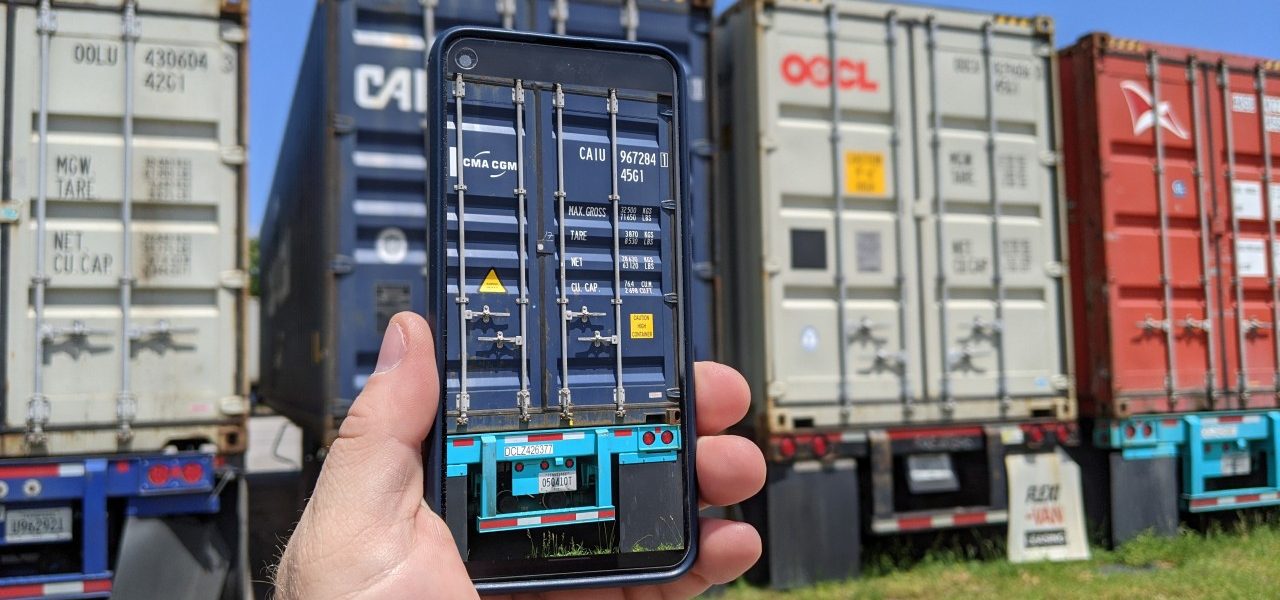

From a distance, almost everything in technology looks cleaner than it really is. Slide decks, product demos and forecasts are clean. Even the language around AI has been unusually clean, as if intelligence itself had finally agreed to become software-friendly. For the better part of the last several years, businesses have been able to talk about AI in polished, almost frictionless terms. It could write, summarize, classify and predict. It could answer questions with the kind of confidence that made people feel either excited or slightly unemployed.
But I have increasingly come to believe that the most important chapter of AI begins the moment it stops living inside neat digital environments and starts dealing with the physical world as it actually is. That is especially true in supply chain.
In supply chain, the real question is not whether an AI system can produce elegant language or make a dashboard look more futuristic. The real question is whether it can help capture what actually happened in the field, under imperfect conditions, and turn that moment into a signal that people and systems can trust. Once you start looking at AI through that lens, the conversation changes very quickly. It gets less philosophical, less theatrical, and much more operational.
The Fourth Pillar of AI Is Applied AI
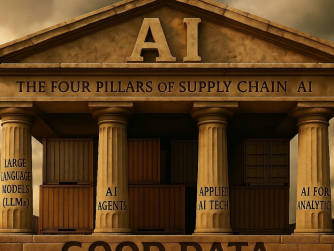
Over the last few years, I have spent a lot of time thinking about what I’ve learned to call the four pillars of AI built on a foundation of (ideally, good) data. The first three are familiar enough by now:
- Large Language Models (LLMs) have changed how people interact with information.
- Analytics have continued to sharpen how organizations identify patterns, spot opportunities, and make decisions.
- Agents are now starting to reshape how tasks get coordinated, triggered, and executed across systems. Those three pillars matter, and I do not say that lightly.
They are real, powerful and are already changing how companies work. But I believe there is a fourth pillar that deserves much more attention, especially in logistics, intermodal, and supply chain operations: the tech industry likes to call it Applied AI.
Now, I know there is another phrase gaining momentum very quickly – Physical AI. That term is becoming more common, especially in robotics, industrial automation, autonomous systems, simulation, and computer vision-heavy environments. I understand why and it is a timely phrase, and it captures something real.
Still, when I write for the audience I know best – supply chain operators, logistics executives, intermodal leaders, facility managers, technology buyers, and people who have to explain operational value to other adults in a budget meeting – I still think Applied AI is the better lead term. Why? Because it says exactly what I mean.
I am talking about AI applied to a real workflow, a real asset, a real handoff, a real exception, or a real physical process. I am talking about intelligence that has to operate where the data is messy, the environment is inconsistent, the process is imperfect, and nobody particularly cares how beautiful the demo looked if the output turns out to be unreliable on a rainy Tuesday at 4:37 p.m. That is not a niche issue in supply chain, that is supply chain.
Why I Still Prefer the Term Applied AI Over Physical AI
One of the problems with modern technology language is that it often becomes narrower precisely when everyone claims it is becoming more expansive. The term Physical AI is useful, but it also points many readers immediately toward robotics, machines in motion, autonomous navigation, and industrial automation systems that physically act on the world. That is part of the story, but for most supply chain organizations, it is not the whole story.
What I am more interested in is what happens when intelligence gets applied to the messy point of contact between a physical event and a digital system. That point of contact could be a gate event and it could be a pickup or a drop-off. It could be condition documentation before a claims dispute or a yard check. It does not stop there as it could be an equipment verification, a workflow trigger, a location validation, or a handoff between organizations that all use different systems and all believe – with charming sincerity – that their version of the truth is the official one.
That is why I keep coming back to Applied AI. It is broader, clearer and it reaches business value faster. It does not require the reader to first decode whether I am talking about humanoid robots, warehouse automation, edge vision, or some poor forklift that has recently been rebranded as transformational. It allows me to keep the conversation grounded in what matters most – whether AI is helping operations become more trustworthy, more responsive, and more useful.
The Real Story Is the Signal, Not the Model
I think one of the easiest mistakes people make in AI is assuming the model is the story. I do not think the model is the story. I think the signal is the story and that distinction matters a great deal in logistics and supply chain.
A photo, a short video clip and a sensor ping is not the story. Even a polished AI-generated explanation is not the story. The story is whether something in the physical world was captured clearly enough, validated strongly enough, and connected tightly enough to an operational workflow that a business can trust it and act on it when it matters.
That story could mean proving a container was picked up when and where someone said it was. It could mean confirming an in-gate or out-gate event. It could mean documenting equipment condition before a disagreement becomes a claims file with seven forwarded email chains and at least one sentence written entirely in capital letters. It could mean validating a yard inventory update. It could mean feeding a management system with something closer to reality than what would otherwise be reconstructed later from memory, manual entry, or the universal enterprise backup strategy known as asking Carl if he remembers.
That is the heart of Applied AI for me. It is the discipline of turning physical reality into a trusted digital signal. If that sounds less glamorous than some of the louder AI narratives in the market right now, that is probably because reality has always had poor branding.
Why Trusted Signals Matter in Supply Chain Operations
Supply chain is, among many other things, a giant machine for converting ambiguity into cost.
If a signal is weak, delayed, incomplete, or difficult to trust, the cost shows up somewhere. Sometimes it shows up as labor, friction, rework, missed event, avoidable detention, demurrage, billing disputes, planning failures, poor coordination, or customer frustration. Sometimes it shows up as teams quietly creating their own side processes because the official system of record is not quite wrong enough to replace and not quite right enough to rely on.
Every experienced operator knows this feeling. The system says one thing, the yard says another, the partner believes a third thing, and suddenly everyone is holding a meeting about an event that should have been obvious in the first place.
That is why I think the next era of AI in supply chain will be won less by the companies with the most impressive language and more by the companies that can create and validate stronger operational signals.
Because if the incoming signal is weak, the rest of the AI stack is often just reasoning over stale records, manual assumptions, partial truths, and operational folklore. That may still qualify as digital transformation in a brochure. In practice, it is often just confusion with a modern interface. I have said before:
AI does not rescue bad data. AI amplifies bad data.
There is a temptation to imagine that better models will somehow compensate for weak operational input. Usually, they do not and they make the weakness move faster while making the output sound more persuasive. This is where bad data can make the error easier to scale and the result is not more intelligence. It is often just a more elegant form of being wrong. There are few things in business more dangerous than a “polished turd” of misunderstanding.
Large Language Models, Analytics, Agents, and Applied AI
This is exactly why I think the fourth pillar matters so much to the first three.
- Large language models become more valuable when they help people interact with stronger information.
- Analytics become more useful when they are identifying patterns based on events that more accurately reflect what happened in the field.
- Agents become far more effective when they trigger workflows, coordinate actions, and escalate decisions based on trusted signals rather than approximations.
If reality enters the system in a distorted way, everything built on top of it inherits that distortion. The language model may become an excellent conversational layer for flawed information. The analytics platform may become a smarter lens on incomplete events. The agent may become wonderfully efficient at acting on a bad assumption.
That is why I do not view Applied AI as a side category. I view it as foundational and it is the point where digital systems meet physical truth, and physical truth is not especially interested in marketing language.
Physical truth does not care about your product naming strategy. It does not care about your valuation. It does not care that your dashboard uses gradients. It barely cares that your implementation team is trying their best. Physical truth cares whether the signal is right.
Applied AI Use Cases in Logistics, Intermodal, and Terminal Operations
When I think about what Applied AI looks like in the real world, I do not start with abstract theory; rather, I like to start with operations. I think about intermodal containers, chassis, trucks, rail equipment, marine terminals, warehouses, distribution centers, gate lanes, yards, and the many handoffs that keep modern supply chains moving. I think about the moments that determine whether a process is trusted or not – proof of pickup, proof of drop-off, condition inspection, arrival verification, equipment identification, yard inventory validation, location confirmation, and event timing.
These are not cosmetic improvements, instead, these are operational and commercial issues. They affect how organizations move freight, manage throughput, reduce claims exposure, coordinate with partners, defend performance, and make decisions across fragmented environments. They shape how well digital workflows connect to physical events, which is really the central challenge in this whole category.
And this is why I believe the first meaningful wins tend to show up in narrower, high-confidence use cases. It all starts with:
- Better capture, which leads to…
- Better proof, which leads to…
- Better inspection, which leads to…
- Better workflow triggers, which leads to…
- Better escalation when confidence is low and finally,
- Better coordination between what happened and what should happen next.
Those use cases may not generate the same excitement as a flashy vision of full autonomy sweeping across the supply chain landscape. But the truth is that in logistics, useful almost always ages better than flashy. The history of enterprise technology is littered with systems that looked like the future and behaved like an intern on their first day.
A Story About AI, Reality, and Mud
One reason I feel strongly about this is that supply chain has a way of humbling big ideas very quickly. A concept can look brilliant in a conference room. Then it meets glare, rain, chipped paint, bent chassis numbers, a driver in a hurry, a yard in disorder, a device mounted at the wrong angle, and a workflow that nobody documented because everybody assumed Steve had that part in his head. Suddenly the conversation becomes less about disruption and more about whether the system can survive first contact with mud and impatience.
That, to me, is where the serious work begins. I do not say that cynically. In fact, I think it is one of the most exciting parts of the whole category. There is something deeply valuable about building AI systems that do not just talk well, but hold up under operational pressure. There is something refreshing about a form of intelligence that has to earn trust the old-fashioned way – by being useful when conditions are not ideal.
In supply chain, nobody gives out trophies for sounding futuristic. At least not for long. Eventually somebody asks, “Can I trust this?” And that is the only question that really matters.
How Supply Chain Organizations Should Start with Applied AI
If I were advising a terminal, a 3PL, a rail-connected facility, a marine operator, or any logistics organization trying to make sense of Applied AI or Physical AI, I would not start with the broadest possible vision statement. I would start with smaller questions that are much harder to fake:
- Where is the signal weak today?
- Where is it delayed?
- Where is it hard to trust?
- Which workflow would materially improve if that signal became stronger?
- Where is ambiguity creating labor, claims, friction, or rework?
- What does human review look like when confidence is low?
Those questions matter because they force the conversation away from theater and toward operations. They require people to think in terms of workflows, cost, trust, and execution rather than simply adopting the latest vocabulary and hoping the rest will sort itself out later.
That is also why I find practical frameworks more useful than generic references to automation. I would much rather organize the discussion around what operations actually need to do:
- see,
- move,
- inspect
- coordinate
Do not keep speaking in broad, vague terms that allow every listener to imagine a different outcome. A useful AI strategy should not feel like an inkblot test. It should feel like a system designed for real work.
That also means guard rails have to be part of the conversation from the beginning, not added later once everyone discovers the hard way that intelligent systems can still make confident mistakes. In supply chain, guard rails are not some philosophical extra. They are one of the most practical parts of the design. They determine when AI is allowed to act, when it should pause, when it should escalate to a human, how confidence should be measured, what gets logged, what can be overridden, and what must be auditable after the fact.
To me, that is not a limitation, rather, it is discipline. The organizations that get the most value from Applied AI will not be the ones that simply deploy it fastest. They will be the ones that are most clear about where AI fits, where it does not, and what must happen when confidence drops or the stakes rise. A strong AI strategy needs good signals, but it also needs good boundaries. Otherwise, you are not building trust, you are just automating risk with better branding.
That is why the best early principles here are not especially glamorous, which is one reason I trust them.
- Design for messy reality, not demo conditions.
- Start with narrow, high-confidence use cases.
- Treat trust and auditability as requirements.
- Use physical signals to reduce ambiguity, not add noise.
- Connect signals to workflows, not just dashboards.
- Blend human judgment with AI escalation and override.
- Build guard rails into the system so that low-confidence events, edge cases, and exceptions do not quietly become expensive decisions.
- Measure operational usefulness, not just technical accuracy.
Those are the kinds of ideas that survive first contact with real operations.
The Future of AI in Supply Chain and Intermodal
I believe the next phase of AI in supply chain will be defined less by who has the most impressive model and more by who can create, validate, and operationalize the strongest signals inside the right guard rails.
That is especially true in intermodal, where containers, trucks, ships, trains, terminals, and yards all depend on the successful translation of physical events into digital understanding. When that translation is weak, everything downstream becomes shakier. When it improves, the value of analytics, agents, automation, and decision support improves with it. But when it improves without discipline, without escalation paths, or without clear rules for human intervention, the system can become more dangerous precisely because it appears more capable.
That is why I think guard rails are going to become one of the most important parts of the next AI era in logistics. Not because they make for exciting marketing copy, but because they are what separate useful operational intelligence from expensive operational overreach. In the real world, AI does not just need to be smart enough to help. It needs to be well-governed enough to know when not to act alone.
The market does not need more vague enthusiasm. It needs sharper thinking about capture, proof, workflow, governance, trust, escalation, and operational signals. It needs more honesty about where automation creates value and where human judgment still has to remain in the loop. It needs systems that do not just produce answers, but produce accountable outcomes.
For my part, I am less interested in whether AI can continue to amaze people from a distance than whether it can prove itself where the stakes are real and the conditions are imperfect. That is where supply chain lives. That is where trust is either earned or lost. And that is where Applied AI – and yes, Physical AI too – will ultimately have to make its case.
Because in the end, I do not think the defining question is whether AI can sound intelligent. I think the defining question is whether the signal is strong enough to trust, and whether the guard rails are strong enough to trust with it.


Latest posts by Chris Machut (see all)
- AI Is an Amplifier, Not a Shrink Ray - July 14, 2026
- From Buzz to Blueprint: Two Years on the Road with the Four Pillars of AI - June 17, 2026
- The First AI Shift Has Already Happened - May 12, 2026