When Intelligence Becomes a Commodity, Reality Becomes the Moat
The better AI gets, the less simply having AI will matter. That sounds contradictory, but I think it is where the market is heading.
Chris MachutRead the article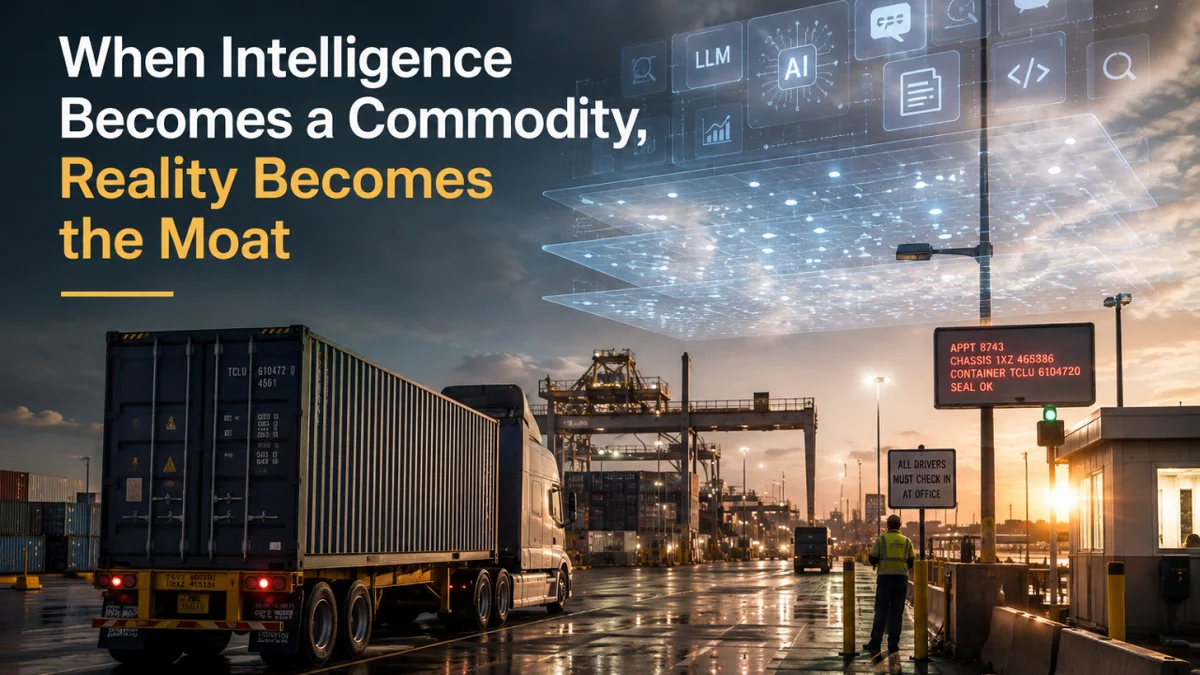
The better AI gets, the less simply having AI will matter. That sounds contradictory, but I think it is where the market is heading. If my competitors can buy access to roughly the same foundation models, reasoning capabilities, coding tools, research systems and agent frameworks that I can, then access to machine intelligence itself is not much of a moat.
The models will continue to differ. Some will be faster, cheaper, better at particular forms of reasoning or more useful in specialized environments. I am not suggesting that all AI is already interchangeable. But broadly capable machine intelligence is becoming more available at exactly the same time it is becoming more capable, which changes the strategic question.
What does the intelligence know about my business that it cannot know about somebody else's? What can it observe? Which information can it trust? Where is it connected to an actual workflow? And what happens when the clean digital version of the operation collides with whatever is happening outside?
I spend a lot of time around that last problem. In physical operations, the difference between what a system says happened and what actually happened can be a trailer sitting in the wrong place, a container that moved without the expected transaction, a driver arriving with information that conflicts with an appointment record, or an equipment ID that nobody can quite read because it is dirty, damaged, partially blocked or passing through lousy lighting in the rain.
Software tends to prefer better-behaved circumstances, while operations rarely cooperate.
That gap is becoming more important because when intelligence becomes abundant, context becomes scarce. Some of the most valuable context in business cannot be downloaded from a model provider. It comes from the operation itself.
The model is becoming infrastructure
There was a short period when access to sophisticated AI could make a company look unusually advanced. That advantage is disappearing quickly. Today a company can connect capable models to documents, databases, customer systems, internal knowledge, code and workflows without undertaking a science project. It can give software access to tools and allow it to investigate problems, generate work, query systems and take bounded actions.
Those capabilities are significant, but they are also increasingly available to everyone else. We have seen this pattern before. Cloud computing created enormous business value, but owning access to compute did not remain a meaningful differentiator. Cheap storage changed what companies could build without turning storage capacity into a durable corporate strategy. AI is beginning to move in the same direction as the capability itself becomes infrastructure.
Competitive advantage moves into what surrounds it: proprietary data, customer knowledge, operational history, trusted provenance, specialized workflows, domain expertise and the feedback loops that come from using the technology against real problems. Your moat increasingly becomes what the AI cannot simply download.
A public model can know a remarkable amount about logistics. It can understand equipment types, regulations, operating terminology and decades of published material. It can reason over manuals and analyze years of historical data. What it does not inherently know is that a particular chassis moved twenty minutes ago, that the terminal operating system has not caught up, that an OCR result is questionable because the marking is damaged, or that two systems disagree about whether an asset is still on the property.
Those are not model problems. However, they are context problems, and context is where a great deal of durable value is moving.
Stop measuring AI. Measure the operation.
One reason companies miss this is that we still talk about AI using the language of the technology rather than the language of the business. How many employees are using it? How many agents have been deployed? Which model are we running? How many workflows include AI? How much generated output are we producing?
Those can be useful implementation metrics, but they are not operating results. If I am running a supply chain operation, I ultimately care whether something changed in the supply chain.
Did throughput improve? Did we reduce unnecessary manual work? Did an exception get detected earlier? Did equipment utilization increase? Did we shorten time to resolution, reduce errors, avoid downtime or protect a customer commitment? Did someone who used to spend two hours investigating a discrepancy spend fifteen minutes instead?
That is where AI has to prove itself. Tokens are not an outcome, and neither are agents. Even automation is only useful insofar as it changes the economics or performance of the work.
This also means not every problem deserves AI. Some problems are deterministic and should stay that way. If a database query or simple business rule can reliably make the decision, inserting a language model into the workflow does not make the architecture more sophisticated. It may simply make a certain slide more fashionable.
Use AI where uncertainty, interpretation, correlation or complex context justify it, and use conventional software where certainty and repeatability are more valuable. In a good operating system, both should coexist without anybody feeling compelled to give the language model top billing. The next phase of AI will be won in the workflow, not the prompt window.
Agency is a capability. Autonomy is a decision.
The excitement around AI agents has blurred a few concepts that need to remain separate. Agents can already perform meaningful work. They can investigate an issue, plan, search, use tools, query multiple systems, compare information, generate an output and initiate a workflow. In bounded environments, they can complete surprisingly complicated sequences with very little human involvement and that is agency, which is real.
What does not follow is that every system capable of acting should be given unlimited permission to act. Autonomy is an organizational design choice, and the right level depends on the consequence of an action, confidence in the underlying information, whether the decision can be reversed and how costly a mistake would be.
I would automate many low-consequence, high-confidence actions aggressively. There is little value in forcing somebody to click Approve two hundred times a day simply so the company can say a human remains in the loop. The calculation changes when software can commit significant money, alter a critical system, make a customer promise, affect safety, reroute expensive equipment or take an action that is difficult to unwind.
At that point, somebody has to decide what the software is permitted to do, when uncertainty is too high, which exceptions require escalation and who owns the result.
Agency is a technical capability. Autonomy is a design choice. Accountability remains an organizational obligation. Software can be given permission to act, but it cannot be given responsibility for the consequence.
AI is collapsing the cost of execution
The stronger case for AI agents is not that they will become magic digital employees. It is that they are steadily collapsing the cost of doing a remarkable amount of work. A small team can already build software faster than it could a few years ago. Research that once took days may take hours. Marketing materials, customer analysis, proposals, outbound campaigns, internal tools and countless other forms of work are becoming dramatically cheaper to produce.
I think this will change the economics of operating a company. A person may be able to run a substantially larger business with fewer people than would have been practical before, and that is a significant shift. It still does not repeal the harder economics of creating value.
You can build a product faster and still fail to find product-market fit. You can generate enormous amounts of outbound and still have nobody who wants to buy. You can produce more research than a person could read in a lifetime and still misunderstand the market. Customers do not appear because the marginal cost of producing work went down.
A company still has to identify a problem worth solving, earn trust, differentiate itself when competitors show up, build distribution, manage risk and consistently deliver something another person or company considers valuable. AI may make it dramatically easier to build something nobody wants, which is not an argument against AI. It is an argument for being precise about what AI actually changes. It can collapse the cost of execution without eliminating the difficulty of discovering where economic value exists.
Cheap answers make judgment more expensive
The same economics show up inside organizations. AI is creating an extraordinary abundance of plausible answers. We can generate more strategies, analyses, recommendations, presentations, code and possible courses of action than most companies could ever consume, while the cost of producing another answer keeps falling.
That pushes scarce value downstream. Was the underlying data trustworthy? What did the system miss? Which assumptions did it quietly make? Does this recommendation actually matter? Is the technically optimal choice commercially stupid? What tradeoff are we prepared to accept? Eventually, somebody still has to be willing to own the decision if it goes badly.
AI may remove a great deal of routine decision-making, and I expect it will. That does not make judgment irrelevant. It moves the expensive human judgment toward exceptions, ambiguity, consequence, relationships and tradeoffs. AI can make producing an answer extremely cheap, while knowing which answer deserves action remains expensive.
This is also why heavy AI use and cognitive outsourcing are not the same thing. I use AI constantly because it removes work that does not deserve to consume a person's time and expands how much ground someone can cover. But it does not create competence where none existed. A power saw makes a carpenter more productive, but it does not teach carpentry. In the same way, AI can amplify capability without repairing poor process discipline, unreliable data, confused ownership or weak understanding of the customer.
Sometimes it simply lets a bad process execute faster.
There is another risk that will grow as the technology improves. When a system is obviously wrong on a regular basis, people scrutinize it. When it becomes right almost all of the time, they learn to trust it. The system does not have to become less reliable to become more dangerous. People only have to become less skeptical, and that matters a great deal once software moves from generating answers to taking actions with financial, operational, customer or safety consequences.
Reality is the next context window
Most foundation models reason primarily over things humans have already digitized: documents, databases, websites, email, code and recorded knowledge. That is an extraordinary amount of context, but it is not the same thing as knowing what is happening in the physical world right now.
A model may know virtually everything that has been written about intermodal transportation and still have no inherent awareness that a specific trailer just entered a facility. It cannot know that an asset remains physically present despite a departure record, that two pieces of equipment were paired, or that a movement everyone expected never occurred unless something first observes and records the event.
Before AI can reliably reason about a physical operation, the operation has to become observable. That means trustworthy event capture matters, along with sensing, identification, computer vision, OCR, telemetry and the less glamorous work of deciding which system or observation deserves authority when they conflict.
We deal with this problem in very practical ways at SiteTrax.io. Reading an equipment identifier sounds trivial until the identifier is painted on dirty steel moving through glare, rain, shadows and poor lighting, perhaps damaged or partially obstructed, while other systems are waiting for the answer.
The business problem is not simply whether computer vision can recognize the characters. It is whether an organization can turn an observation into a trustworthy operational event and understand what to do when that event does not agree with the digital record.
AI cannot manufacture ground truth. For consequential operational facts, some evidence has to establish what happened. The source matters, confidence matters and provenance matters. If two systems disagree about where an asset is, hiding the disagreement may produce a cleaner database, but it does not produce a better understanding of the operation.
Once the underlying signal is trustworthy, AI becomes extraordinarily useful. It can correlate an observed event with appointments and historical activity, investigate discrepancies, find patterns a person would struggle to see, prioritize exceptions, recommend an action and, where appropriate, execute part of the workflow.
The practical order matters: observe what happened, create a trusted event, reconcile it with the surrounding systems, then use intelligence to help determine what it means and what should happen next.
That is a broader opportunity than robotics alone. Physical AI will become increasingly important as autonomous machines and embodied systems improve, but there is also an enormous category of Applied AI in physical operations where people, conventional equipment and existing infrastructure continue doing the work. Sometimes AI does not need a robot body... it needs an accurate understanding of what just happened at gate three.
Where the durable advantage moves
I am bullish about AI partly because I expect it to become less exotic. Reasoning will improve, agents will become more capable, model costs will fall to almost free / commodity level for everyone especially with open-weight models and switching among providers will get easier. An AI model only has to become sufficiently capable, available and substitutable that access to the model stops being the primary source of differentiation. In other words, many capabilities that feel differentiated today will eventually become assumed parts of the enterprise technology stack.
That should be good news for companies that are actually applying the technology, because if the model becomes infrastructure, the advantage moves toward the business itself: proprietary information, operational observations competitors cannot see, workflows developed through years of experience, customer knowledge, trusted data and people with enough domain judgment to recognize when the machine has produced an elegant answer to the wrong question.
The first phase of AI was largely a demonstration of what models could do. The next phase will be measured by what businesses can actually accomplish with them, which is a harder test but a much more useful one. AI does not need to be magical to be transformational... it needs to be applied to reality.
Related work
Find this in the history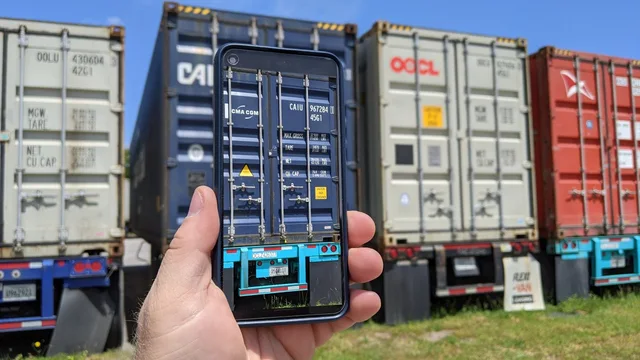
Applied AI in Supply Chain: Turning Physical Events Into Trusted Signals
From a distance, almost everything in technology looks cleaner than it really is.

ChatGPT Saved My Dog
I adopted a dachshund named Frankie late last year. Frankie is adorable — except for her breath.

Spire: The Five Keys To Business Bliss
In this podcast and article on ThoughtLeadership.biz, Mr. Machut talks about nurturing our creative energies and engaging in meaningful learning activities to increase wellbeing.